Does Loan Settlement Affect Your CIBIL Score? How to Fix It
❤️ Spread the Love
When money is tight, keeping up with loan EMIs can become difficult. You may have tried to manage your expenses, borrowed from other sources or spoken to your lender for a way out. In some cases, loan settlement becomes the only option that seems manageable.
The immediate pressure may ease once the lender agrees to accept a reduced amount. But a few months later, you might check your CIBIL report and notice something concerning: your loan is marked as 'settled'.
What does this mean for your credit score? Can you get the status changed? And will you be able to get another loan in the future?
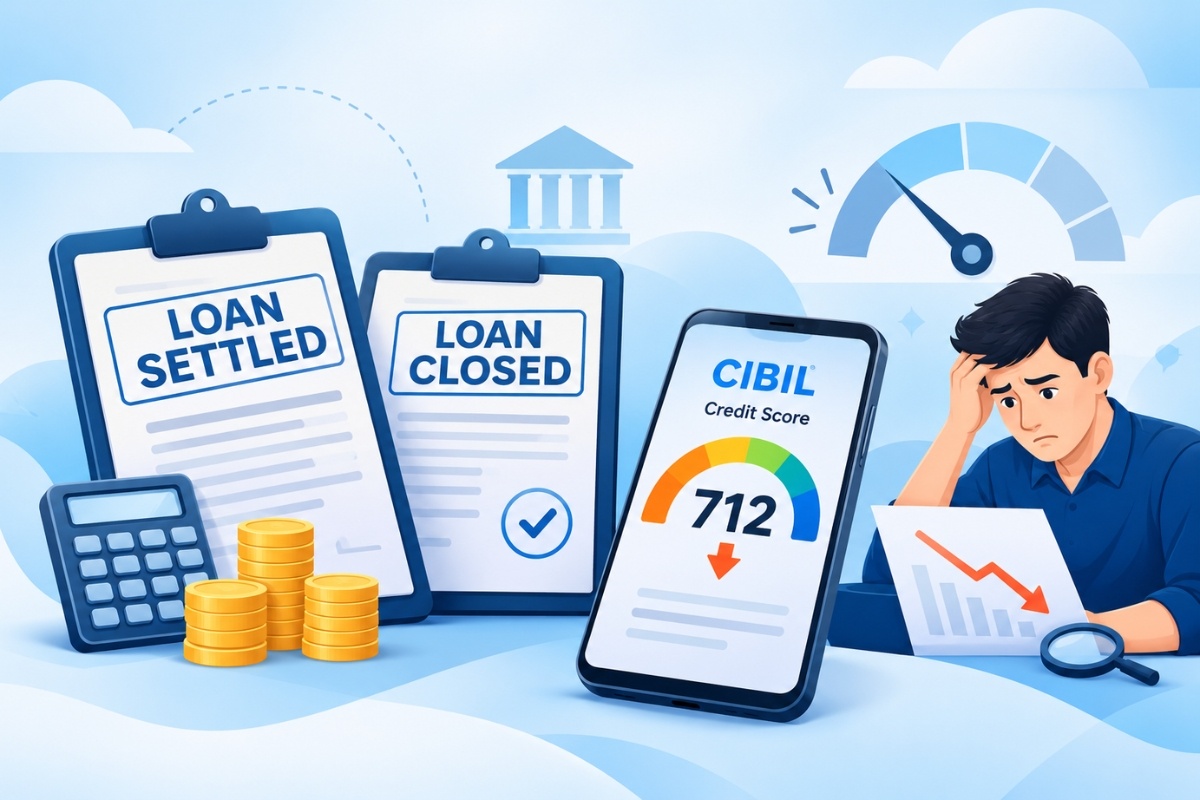
Yes, loan settlement can affect your CIBIL score. When you settle a loan by paying less than the full outstanding amount, the lender may report it as 'settled' rather than 'closed'. This can make it harder to qualify for future credit.
The good news is that there are steps you can take to improve your credit profile. Let's understand what loan settlement means, how it affects your credit history and what you can do next.
What Is a Loan Settlement?
Loan settlement happens when a lender agrees to accept an amount lower than what you originally owe to resolve your outstanding debt. It is usually considered when a borrower is struggling to repay the full amount.
For example, imagine you have an outstanding personal loan of ₹1,00,000 but are unable to manage the remaining payments. After discussing your financial situation, the lender agrees to settle the loan for ₹65,000. If you pay that amount according to the agreed terms, the settlement is completed.
That may sound like the end of the matter, but there is an important difference between settling a loan and repaying it in full.
The lender has accepted less than the total amount due, and this can be reflected in your credit report. The account may be marked as 'settled', which future lenders can consider when reviewing your application.
Loan settlement can offer relief when repayment becomes difficult. However, if you can afford to repay the full amount, it is worth discussing other options with your lender before choosing settlement.
How Does Loan Settlement Affect Your CIBIL Score?
Your CIBIL score gives lenders an idea of how you have handled credit in the past. Your repayment history, credit utilisation, outstanding debt and other details in your credit report can influence how lenders assess you.
When you settle a loan for less than the amount due, it indicates that the original repayment obligation was not fulfilled in full. This is why a settled account can have a negative impact on your credit profile.
Here is what that can mean for you.
Your credit score may drop. The extent of the impact depends on your existing credit history and other information in your report. There is no fixed number of points that every borrower loses after a settlement.
Getting another loan may become more difficult. Lenders may be cautious when they see a settled account, particularly if there are other missed payments or outstanding dues in your credit history. You may face rejection or stricter lending terms, depending on the lender's eligibility criteria.
The remark does not disappear when you finish the settlement. Paying the agreed settlement amount resolves the arrangement with the lender, but it does not automatically erase the account's history from your credit report.
This is an important point to understand: a lower CIBIL score after settlement does not mean you can never borrow again. Your future repayment behaviour matters, and you can work towards building a stronger credit profile over time.
Settled vs Closed: What Is the Difference?
If you have checked your credit report after repaying a loan, you may have noticed terms such as 'settled' and 'closed'. They may sound similar, but they do not mean the same thing.
Status | What it means |
Settled | The lender accepted less than the full amount owed under an agreed settlement. |
Closed | The loan has been fully repaid and the account has been closed. |
Overdue | A payment remains unpaid beyond its due date. |
The difference comes down to how much you have repaid.
A loan marked 'closed' generally indicates that you fulfilled your repayment obligation. A loan marked 'settled' indicates that the lender accepted a reduced amount instead.
This distinction matters when you apply for credit. A lender reviewing your report may view a settled account differently from one that was repaid in full.
If your account is accurately marked as settled, you cannot simply ask the lender to change the label. However, if you pay the remaining balance and the lender confirms that the account qualifies for full closure, you can request an update to your credit report.
If you are unsure how lenders interpret your credit history, our guide on how CIBIL works explains the basics.
How to Improve Your CIBIL Score After Settlement
There is no overnight fix for a credit score affected by loan settlement. What you can do is address any outstanding issues and build a consistent record of responsible credit use.
Here are six practical steps to get started.
1. Ask Your Lender About Clearing the Remaining Balance
If your loan was settled for less than the total amount due, contact your lender and ask whether you can pay the remaining balance to fulfil the original repayment obligation.
For example, if you owed ₹1,00,000 and paid ₹65,000 under the settlement, ask the lender whether paying the remaining ₹35,000 would allow the account to be reported as fully repaid and closed.
Do not assume that paying this amount will automatically change the status. First, obtain written confirmation of the amount payable, the applicable terms and how the lender will report the account.
If the lender confirms that full closure is possible, complete the payment and keep the receipt. Once the lender updates the account, check your credit report to ensure the change is reflected correctly.
2. Get a No Dues Certificate
Whenever you complete the required repayment, ask your lender for a No Dues Certificate (NDC) or the appropriate written confirmation.
This document can help establish that you have met the lender's payment requirements. Keep it along with your settlement letter, payment receipts and any communication about the account's closure.
If your credit report continues to show an outstanding balance or an incorrect status, these documents can support your request for a correction.
Remember, a No Dues Certificate is useful evidence, but it does not automatically remove an accurate settlement remark. The information reported must reflect the actual status of your loan.
3. Consider a Secured Credit Card
If you do not have an active credit account, a secured credit card may be one option to consider.
These cards are generally issued against a fixed deposit, subject to the bank's eligibility requirements. You can use the card for everyday expenses and repay the bill by the due date.
Start small. Use it for purchases you can comfortably afford, pay the bill in full and avoid carrying a balance from month to month.
Over time, responsible use may help build a positive repayment history. However, a secured credit card is not a guaranteed way to increase your CIBIL score, and you should not open one if managing another credit obligation would strain your finances.
4. Keep Your Credit Utilisation Low
Credit utilisation is the percentage of your available credit limit that you are using.
Suppose your credit card has a limit of ₹50,000 and your outstanding balance is ₹10,000. Your credit utilisation is 20%.
As a general guideline, try to keep your utilisation below 30%. Lower utilisation can be helpful, although no particular percentage guarantees a higher score.
If your balances are regularly close to your credit limit, work on paying them down. Also, avoid unnecessary spending simply because credit is available.
The aim is to demonstrate that you can manage the credit you already have without depending too heavily on borrowed money.
5. Avoid Applying for Too Many Loans at Once
After a settlement, it is understandable to want to apply for another loan as soon as possible. You may need the money, or you may want to prove that you can qualify for credit again.
However, applying to several lenders in a short period can result in multiple hard inquiries on your credit report. Repeated applications may also indicate that you are actively seeking additional credit.
Before applying, check the lender's eligibility requirements and review your current credit profile. If your report contains errors or you have outstanding payments, address those issues first.
A little patience can be more useful than submitting several applications and hoping one gets approved.
6. Make Every EMI and Bill Payment on Time
One of the most useful things you can do for your credit profile is build a consistent record of timely payments.
Pay your existing loan EMIs and credit card bills by their due dates. If you often forget payment dates, set reminders or arrange automatic payments while ensuring that sufficient funds are available.
Avoid taking out a new loan simply to build your credit history. Focus on managing your current obligations properly and borrowing only when you genuinely need to.
Check your credit report periodically, too. Make sure your payments are recorded correctly and that there are no unfamiliar accounts or incorrect outstanding balances.
Your past settlement may remain part of your credit history, but responsible financial behaviour going forward can help strengthen your profile.
How Long Does a Settlement Stay on Your CIBIL Report?
Many borrowers hear that a loan settlement stays on their credit report for seven years. However, you should not assume that this is a universal retention period without checking the current rules applicable to your credit report.
A genuine settlement does not automatically disappear when you start making payments on time again. Similarly, paying the agreed settlement amount does not necessarily remove the historical remark.
If the entry is incorrect, duplicated or outdated, you can raise a dispute with the relevant credit bureau and contact your lender to have the information reviewed.
If the information is accurate, focus on improving the rest of your credit profile rather than waiting for the remark to disappear. You can also read our guide on how to remove a written-off status from CIBIL to understand how reporting errors and account-status corrections are handled.
Conclusion
Settling a loan can help you deal with a difficult financial situation, but the impact on your credit report should not be overlooked.
If your CIBIL report shows a settled account, start by checking exactly what the lender has reported. Find out whether any balance remains payable, keep the relevant documents and request corrections if you find inaccurate information.
From there, focus on the basics: pay your bills on time, keep your credit card balances manageable and avoid applying for credit without a clear need.
Your credit history is built over time, and one settlement does not define every financial decision you make in the future.
If you are considering borrowing again, explore PayMe's personal loan options and check the eligibility requirements before applying.
About the Author
Himanshu Mishra
@himanshu.mishra@paymeindia.in
View all posts →